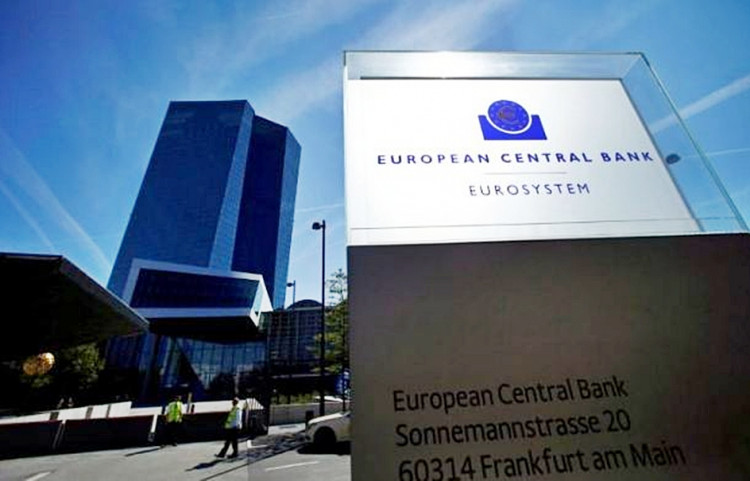
The European Central Bank raised interest rates on Thursday for the first time since 2023, citing mounting inflationary pressures linked to the war involving Iran and signaling growing concern that higher energy costs could complicate the euro area's economic outlook.
The ECB increased its key interest rate to 2.25%, a move that had been widely anticipated by financial markets. Policymakers said the decision was based on an assessment that remains "robust across a range of scenarios mapping out how the shock might evolve and affect the medium-term outlook for the euro area."
The rate increase comes as central banks on both sides of the Atlantic grapple with a renewed inflation threat driven by geopolitical instability and rising energy prices. While the ECB tightened policy, investors are also reassessing expectations for the U.S. Federal Reserve, where hopes for interest-rate cuts this year have largely faded.
Alongside the rate decision, the ECB revised its economic projections, raising inflation forecasts while lowering expectations for growth.
Updated ECB projections include:
- Inflation averaging 3.0% in 2026
- Inflation easing to 2.3% in 2027
- Inflation reaching 2.0% in 2028
- Economic growth of 0.8% in 2026
- Growth rising to 1.2% in 2027
- Growth reaching 1.5% in 2028
The central bank said the revisions reflect expectations that energy prices will remain elevated for longer as tensions in the Middle East continue to disrupt markets.
The ECB's move arrives as economists increasingly question whether the Federal Reserve will be able to ease monetary policy in the near future. A recent Reuters survey found that most economists no longer expect a U.S. rate cut this year, while interest-rate futures markets have begun pricing in the possibility of an increase before year-end.
The debate has intensified following a series of economic reports suggesting the U.S. economy remains resilient despite higher borrowing costs. According to the U.S. Bureau of Labor Statistics, employers added 172,000 jobs in May while the unemployment rate held steady at 4.3%.
Job creation was concentrated in leisure and hospitality, local government and health care. Employment in financial activities, however, declined during the month.
President Donald Trump has continued to oppose higher U.S. interest rates even as inflation concerns persist. During an interview with NBC's Meet the Press, Trump expressed confidence in Federal Reserve Chair Kevin Warsh while arguing against additional tightening.
"Kevin is fantastic, and I want him to do whatever he wants," Trump said. While emphasizing that he did not intend to pressure the Fed chairman, Trump argued that strong economic conditions should not automatically result in higher borrowing costs.